Monday, February 24, 2014

Space research pays for itself, but inspires fewer people.

To say space research is a waste of money is wrong. For every US$1 put into US space agency, its citizens get US$10 as payback; in Japan and the European Union that amount is more than US$3. 

The growing private
space industry is built around these government space programs and would not exist without them. The UK's annual US$500m contribution to the European Space Agency (ESA) has catalysed the formation of the fastest growing industry. Its private space industry contributes US$15.2 billion a year to the economy. Similarly, Japan's US$2.3 billion into the Japan Aerospace Exploration Agency (JAXA) has enabled its private space industry to contribute US$31 billion.
Not only do space agencies pay for themselves directly, they create jobs and are boosting the global economy by US$300 billion annually through private industry.
The thousands of inventions and innovations spun out from space research have become an integral part of our daily life: weather forecasting, satellite television and communications, disaster relief, traffic management, agricultural and water management, and global positioning system (GPS), are but just a few.
As space research required bigger and bigger investment, the nature of international research changed. The space race became a space collaboration, which is symbolised by the International Space Station.
If nothing else, as Pete Worden, Centre Director of NASA Ames, told me, "Space is cool". It inspires the new generation of kids.
The Apollo missions inspired a generation. The number of US graduates in the science, technology, engineering and maths (STEM subjects), from high-school through to PhD, has doubled. The relative growth rate since then has dropped drastically, even though the total number has gone up. Doubling a population's scientific literacy when it is living in a world so dependent on science and technology was a good move, and it slung the US into the dominant position it has stood in for the past five decades.
While they still inspire, some would say today's space agencies lack direction. Robert Zubrin, president of the Mars Society, said, "Instead of pioneering new worlds like those explorers of the past, we have left our sailors in the harbour for half a century to see the health effects from doing so".
The average annual expenditure of NASA during the Apollo Era was US$23 billion in today's money. NASA's average spend in the last decade was US$17 billion. Even with similar budgets, the progress made in the last decade is simply not comparable to what was achieved in the 1960s.
Space research has opened our eyes to real risks we face as a species: global warming, asteroids impacts, vulnerable ozone layer, and even warning about how our electronics would be affected by the sun.
Dreaming big
One way to push the speed of progress would be to make life multi-planetary. Visionaries like Astronmer Royal Martin Rees believe explorers would have a human base on Mars by 2100. He claims that if do not spread soon this will be "our final century".
Space agencies around the world are slowly converging on the grand challenge of sending a manned mission to Mars. Mars is the next logical step. Zubrin said, "The Moon is to Mars, what Greenland was to North America in the previous age of exploration".
Mars has all of the resources required for a technological civilisation. With a 24.6 hour day, fertile soil, a CO2 rich atmosphere, and an abundance of water, the introduction of flora is a real near-term possibility. Transformation of the atmosphere into something more hospitable may not remain science fiction.
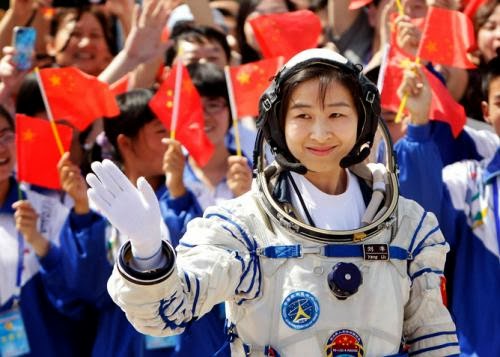
But it is no longer reasonable to just assume that the first human expedition to Mars will be carried out by astronauts from the US or Europe. As the late Jacob Bronowski once put it, "Humanity has a right to change its colours".
Through industrialisation, the economies of China and India have been doubling in scale every decade, and are forecast to overtake the US by 2023 and 2048 respectively. Though some are still resistant, the West has slowly begun to realise that if it does not take the next step for humanity, someone else will.
Some believe that a manned mission to Mars would require multi-national collaborative effort, however Jean-Jacques Dordain, director general of ESA, has said:
Coupling this ever growing obsession we in the West have with risk aversion, to the bureaucracy and difficulty of international collaboration, though I really want us to do it, such a mission would be impossible for us to achieve.
Two privately funded teams, Inspiration Mars and Mars One, are set on sending a manned mission either to or around Mars in the coming decade. But Elon Musk, who leads SpaceX, is worried that the real question is not who, but when. He wonders "for how long humanity will have the technical capability of sending people into and beyond orbit."

Source: PHYSORG

RoboDoc to the rescue: NASA to send robotic doctor to space

NASA is developing a humanoid robot to perform medical procedures, including surgery, at the International Space Station and even en route to Mars.
The robot, which is named 'Robonaut 2,' is now undergoing further development and tests at Houston Methodist Research Institute.
Dr. Zsolt Garami, an instructor at the institute, told Computerworld that there is already a robot at the space station that can perform basic tasks, such as pressing buttons. However, he stated that Robonaut could serve a different, more advanced purpose than its predecessor - by acting as a nurse or physician.
"Our motivation was really when we saw astronauts perform ultrasounds on each other or on themselves. Why not have a robot help? There's already a robot up in the space station, and he's already shown that he can switch buttons reliably. Why not make him a nurse or a physician?" said Garami.
Robonaut 2, or 'R2,' is the twin of an earlier R2 robot which was taken to the International Space Station (ISS) in 2011.
It has taken about 11 years to build the $2.5 million robot, which runs on 38 PowerPC processors. Those processors include 36 embedded chips that control the joints in its legs and arms.
Garami said he is confident that the robot will not have any trouble at the ISS, adding that his humanoid student is working much faster and more dexterously than his human students.
"I would say that within an hour I trained him more than with other students I've been working with for a week, so I think he's learning really fast," Garami said in a video released by NASA.
In the video, the automaton performs an ultrasound scan on a mannequin and demonstrates using a syringe as if it were giving an injection.
"His motions, without shaky hands, are very precise and gentle. There were no sudden motions," Garami told Computerworld.
Research shows that robots may be better at carrying out certain kinds of surgery than humans.
A study by the University of Maryland School of Medicine in 2008 showed that patients who underwent minimally invasive heart-bypass surgery using a robot had shorter hospital stays, faster recovery times, and fewer complications than patients who had undergone traditional surgery.
Garami wants Robonaut to perform surgery in space one day.
"Say you're sending two people to Mars and one has a medical emergency. One astronaut needs help but they're going to be 15 to 20 minutes with no video signal. They're left alone with no connection to Earth...I feel Robonaut could be a partner for them, helping them," he said.
Robonaut can't perform surgery just yet, but it is just about ready to perform CPR.
But Garami also has earthly intentions for Robonaut, believing the robot could be a huge asset to the military. He says that instead of sending a nurse or an army medic to save a life, Robonaut could carry the soldier out of danger and give medical assistance at the same time.
A spokesperson for NASA was a bit more grounded about how soon Robonaut might be on active duty, whether in space or on the battlefield.
"We are really just starting to explore this capability down here on the ground, and theirs is a significant amount of research to do before we would be able to make the jump to space," he said.

Source: Voice of Russia

.

At Mars, Is the Doctor In?

It sounds like something from a science-fiction survival film: A colleague on a Martian outpost breaks a leg during an extra-vehicular activity (EVA), but not far from base. Brought back safely, the colleague is unconscious and losing blood. To make matters worse, the immediate crew includes someone trained in foundational medical practices, but to reset the bone and properly close the wound, this team needs guidance.
Recently, the MarsCrew134 Analogue Astronaut Expedition simulated a mission to Mars over the course of two weeks at the Mars Desert Research Station (MDRS) in the Utah desert. Dr. Susan Jewell, MarsCrew134 Medical Officer and founder of the International Space Surgery Consortium, led an experiment to play out the above emergency medical scenario.
 The scenario began outdoors with a crew member down. Jewell conducted a spinal assessment, as best as possible given the limitations of the suit. Two additional crew members brought the "injured" colleague back to a make-shift operating table on base. A dummy used in hospital training acted as the Marsonaut in need of aid while Jewell and team scientist Vibha Srivastava prepared to perform surgery with minimal, prior training.
To help and guide the MarsCrew134 team, they called for help: Doctors on "Earth" (Matthieu Komorowski in Lille, France, the medical officer of MarsCrew133) and "Mars" (the European Space Agency (ESA) Concordia research team in Antarctica) joined the operation remotely. The goal of the experiment was to determine if minimally trained crew personnel could perform anesthesia, and even an operation, in an emergency.
Doctors stationed at the ESA Concordia research station in Antarctica simulated another human outpost on Mars, with nearly real-time communication. As signals between Earth and Mars take between a half dozen and twenty-two minutes to propagate, one-way, "The patient has stopped breathing! What should I do?" would likely result in the patient dying before the reply was received.
In this particular scenario, a Skype session invoked a 3- to 5-second delay in video and audio, due to the latency of the satellite feeds on both ends. This relatively minimal delay, combined with poor visual quality and intermittent sound was ample to invoke many of the issues imposed by Earth-to-Mars communication. It was not easy!
Once the operation was underway, a computer software system simulated the patient's vital signs based on real-life data correlated to that particular kind of injury. The prospects did not look good: The patient had lost one liter of blood and was in shock. In this case, it was vital to anesthetize and treat the wound. Blood pressure was 57/38, heart rate was 127 beats per minute, respiration was 24 breaths per minute, and oxygen saturation was 94 percent.
Following the materials checklist under Komorowski's supervision, the crew members addressed suction, oxygen, airway, drugs, intravenous fluids (IV) and monitors — all confirmed in working order and ready.
nce the IV was in place, Komorowski instructed the fluid to be administered at the highest setting. Oxygen was given through a face mask. Komorowski described getting the intubation tube into place with Concordia stepping in to give advice. The procedure was delayed by a tube getting lost in the hectic action, but with Komorowski's approval, Jewell and Srivastava improvised and found a way to make the situation work.
Jewell and Srivastava got the job done, and the patient survived. Drugs administered brought the patient back to consciousness and the eyes opened and responded to basic input, such as the squeezing of hands. The patient was anesthetized and conscious!
To treat the wound, Concordia base doctors Tindari Ceraolo and Adrianos Golemis took over, leading their colleagues on Mars. The two sites were using a satellite feed for the telesurgery — video was blurry and unreliable. To compensate for the difficult circumstances, Jewell described in detail what the MDRS crew was seeing and doing.
ESA-sponsored medical doctor in Antarctica, Adrianos Golemis, instructed Jewell to clean the wound while Komorowski monitored the vital signs from France. From needle size to insertion angle, Golemis directed the MarsCrew134 how to sterilize, clean and sew up the wound and protect it with gauze.
The operation was over in less than an hour, and most importantly the simulated "patient" survived to see another Martian sunrise.
Srivastava had been helping Jewell throughout the procedure on-site at the MarsCrew134 habitat, and as a crew scientist without a medical background she found it difficult to follow some of the technical instructions such as 'auscultate chest.' Future experiments might benefit from labeling equipment so crew members can find what is needed more quickly. Reaching for tools was a struggle and coordination was difficult. Without prior training, such things are unavoidable.
During the debriefing, Jewell remarked, "Finding the challenges and working out how to solve them s what all this is about." Similar, future endeavors are in development by the International Space Surgery Consortium.
To learn more about MarsCrew134, visit www.marscrew134.org.

This article is adapted from one that appeared on the European Space Agency blog Chronicles from Concordia. The views expressed are those of the author and do not necessarily reflect the views of the publisher. This version of the article was originally published on Space.com.